Overview
Selenicereus setaceus, cv. Baby Cerrado
Other names: None that I know of
Pollination: self-sterile
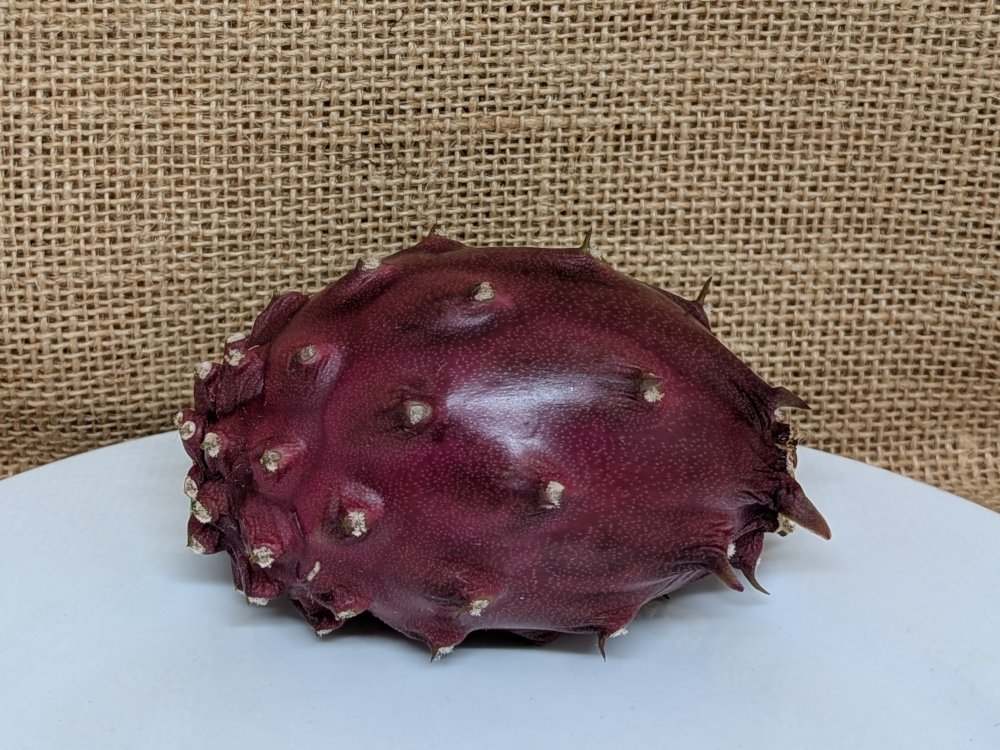
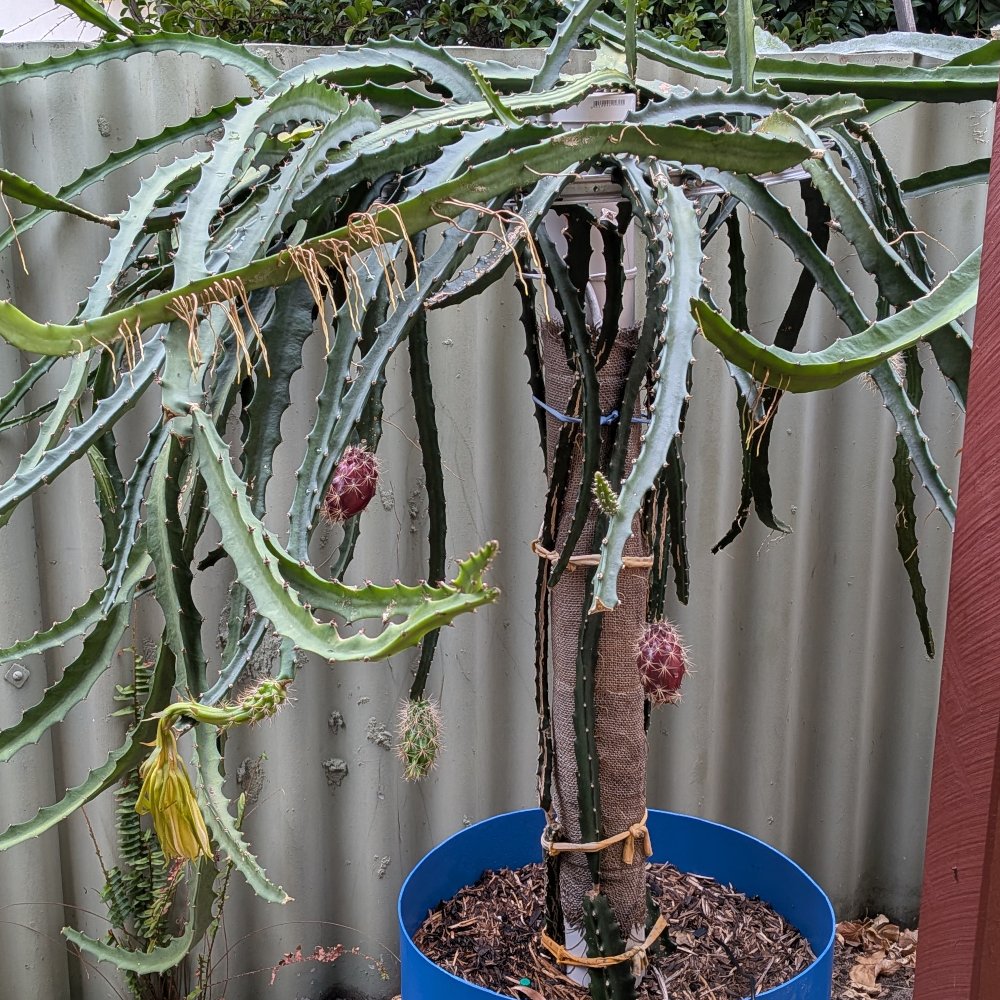
Everything about this variety is small and spikey. The branches are skinny and chunky with sets of four spines, the buds are like thorny little fingers stretching towards the light, the flowers aren’t much better, and the fruit are small even by Selenicereus standards. That is not to say this is not a very popular variety, however. Quite the contrary, though it is still often difficult to obtain. I think what draws people in is its uniqueness, and I do agree that having these velvety red, spikey little grenades in the gardens adds a bit of excitement to the morning inspection. Unfortunately, they taste a little slimy, more like what you might expect if you were to bite into the plant itself. There is a nice sweetness if you can get past the texture though.
Buds
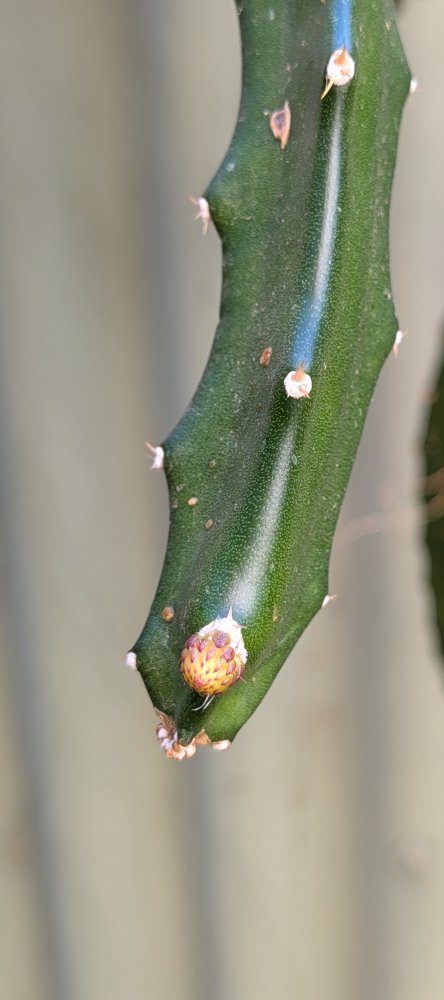
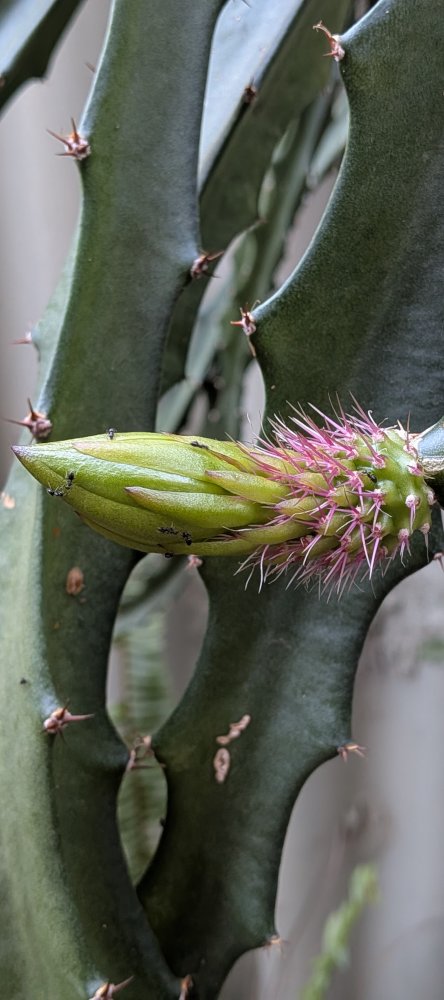
Unlike Yellow Columbiana, this variety buds in the middle of the fruiting season, which is surprising given its Selenicereus makeup. The buds start off as little furry balls, which eventually you realise the fur is actually soft spines, and after a considerable amount of time a long skinny neck starts to extend out, giving them a real alien appearance. Interestingly, the spines are sort of a pinky-red colour, and are much more prominent than, and larger than, those of its yellow cousin.
Flowers
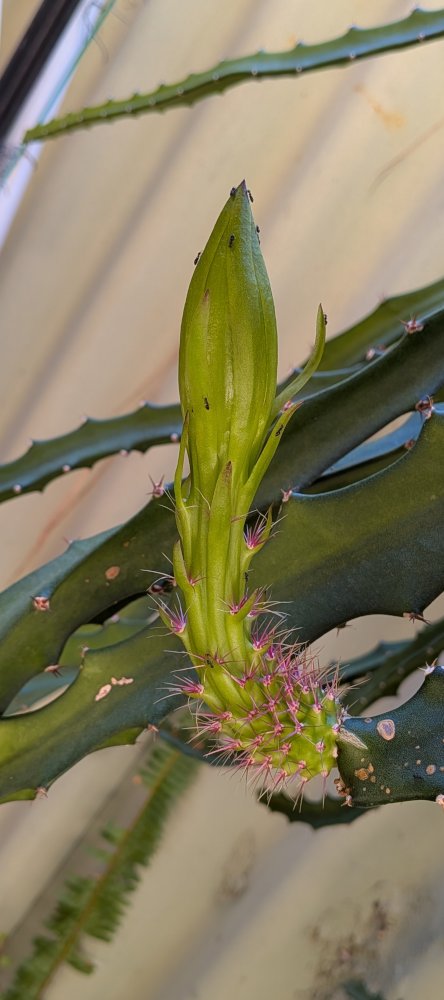
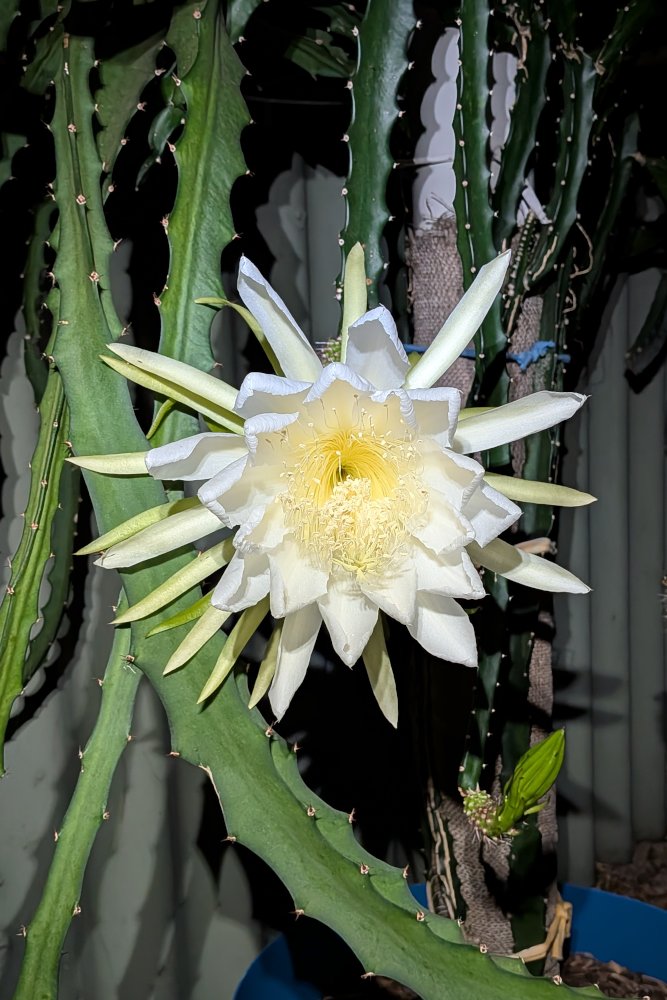
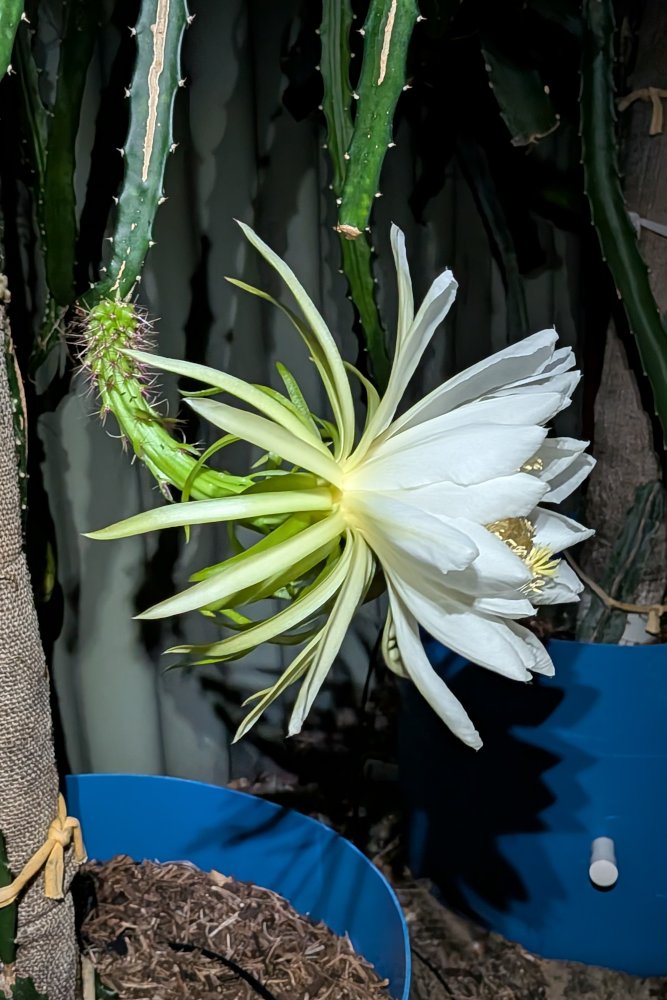
Comparing once again to yellow Columbiana, the petals are surprisingly pointy, and the flower itself does not have that distinctive bowl shape of the megalanthus varieties (though of course it is not a megalanthus anyway). It is quite a small flower, perhaps the smallest in my collection, with a barely protruding stigma that brings into question the fertility status, though this seems to unanimously be given as self-sterile. I wouldn’t say the flowers are the most spectacular part of this variety.
Fruit
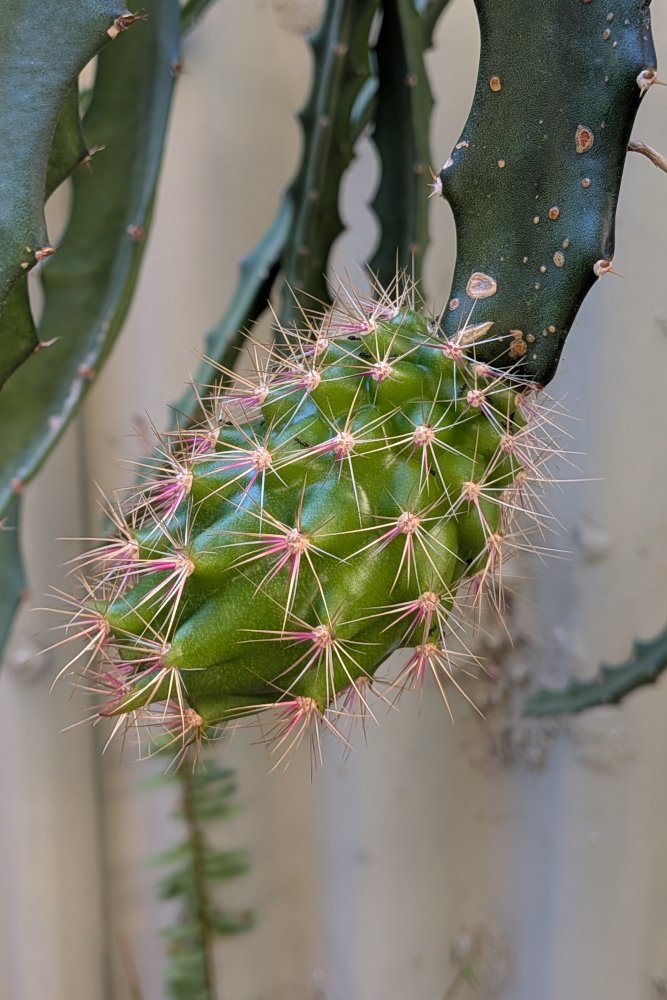
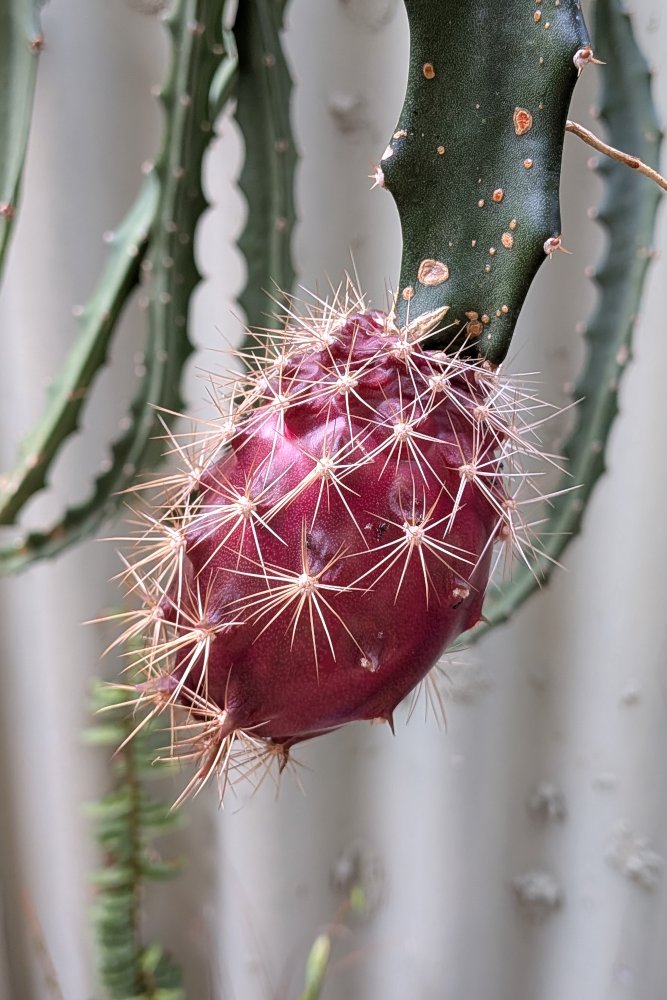
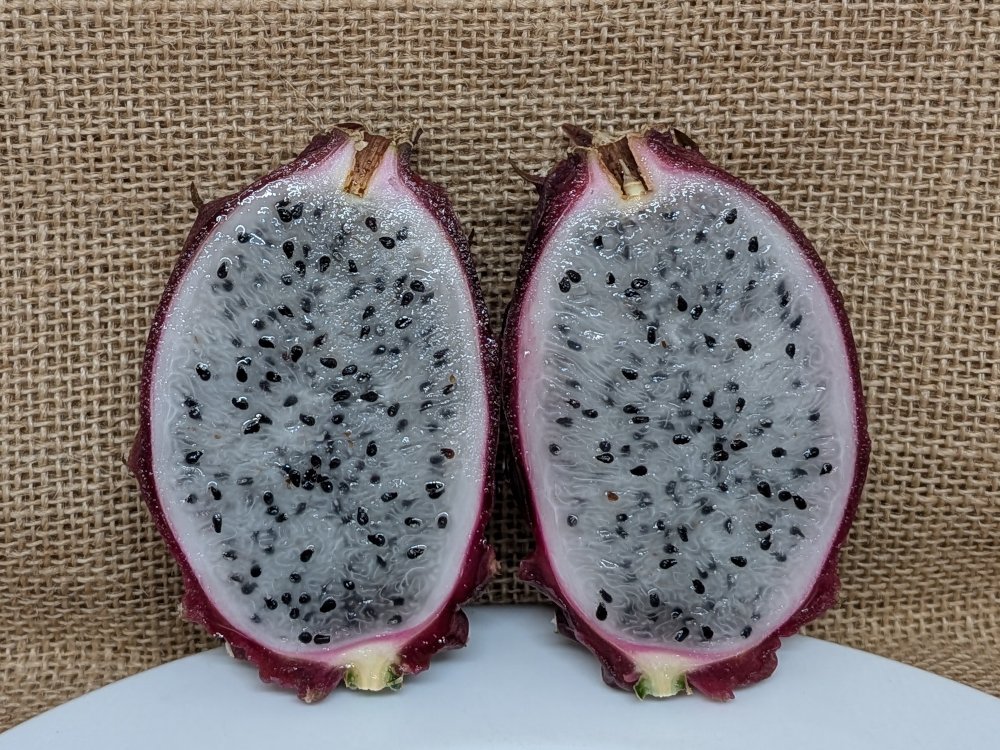
In my opinion, these are one of the “coolest” fruits to have in the garden. Like a spiky grenade, they start off in a vibrant lime green colour before turning a deep, velvety red that contrasts well with the dark green of the plant. The flesh is a translucent white with a bit of a grey tinge to it, and you can almost see from the picture that the texture is a little slimy. The skin is thin and surprisingly smooth, peeling away easily from the little morsel of flesh that you laboured so hard to get. I would say the flavour is reminiscent of a pear, though a bit more tropical.