Overview
Hylocereus undatus ×, cv. Chameleon
Other names: None that I know of
Pollination: self-fertile
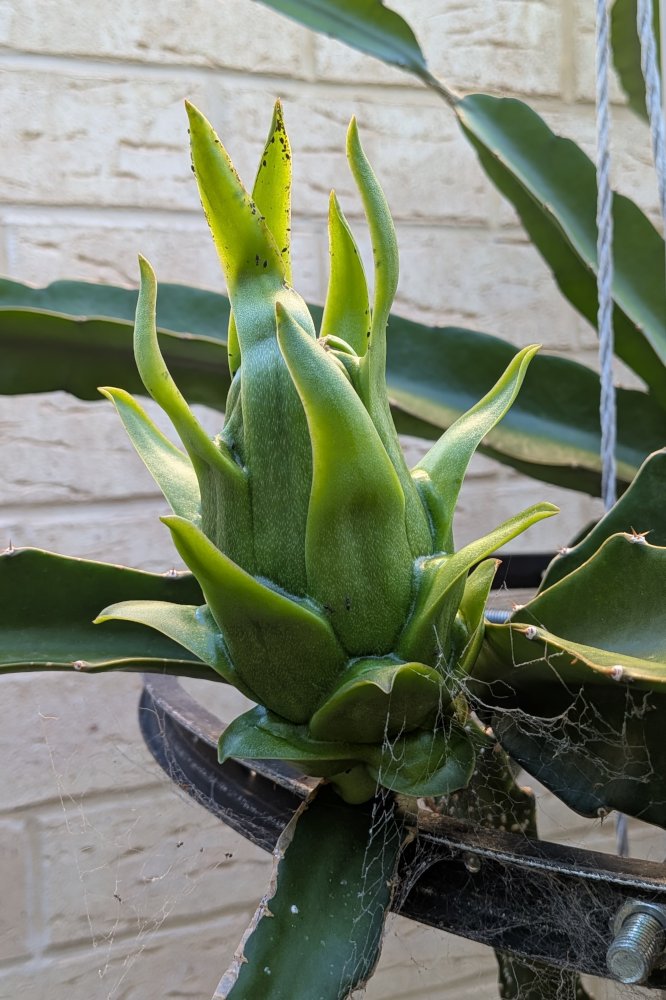
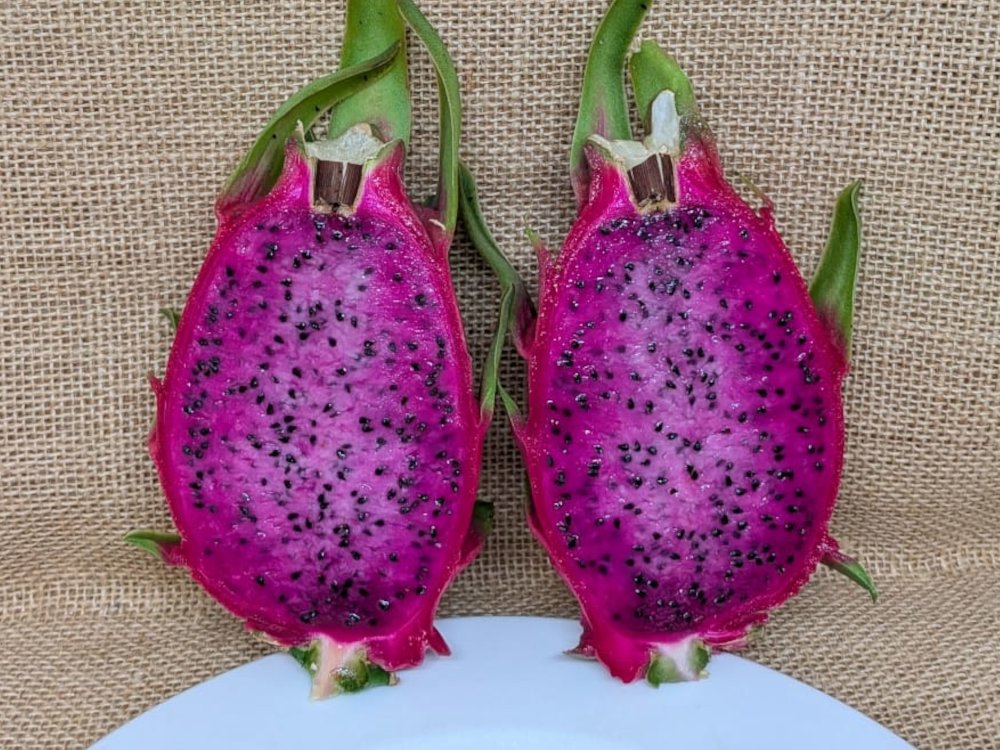
This one gets its name from the unique, two-tone flesh colour it develops, which becomes more apparent if you pick it at just the right stage (I picked my first couple a little late, so the purple seeped into the white). The plant itself is a little unusual too, with quite “wavy” growth and a seemingly ad hoc spine placement. The buds are another striking feature, appearing almost variegated in their earlier stages, altogether making this variety one of the easiest to identify. All sources I have looked at claim it is self-fertile, though I haven’t tested it myself. Unfortunately, the taste was pretty awful, so bad I couldn’t even finish it. Very seedy and exceptionally Earthy, though I do think the plant was a bit malnourished, and possible not mature enough as well. Chameleon is susceptible to rust and scale.
Buds
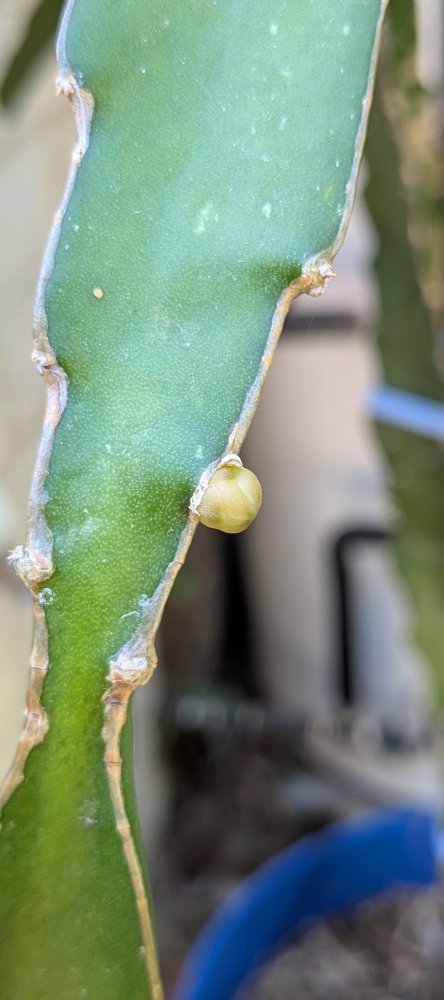
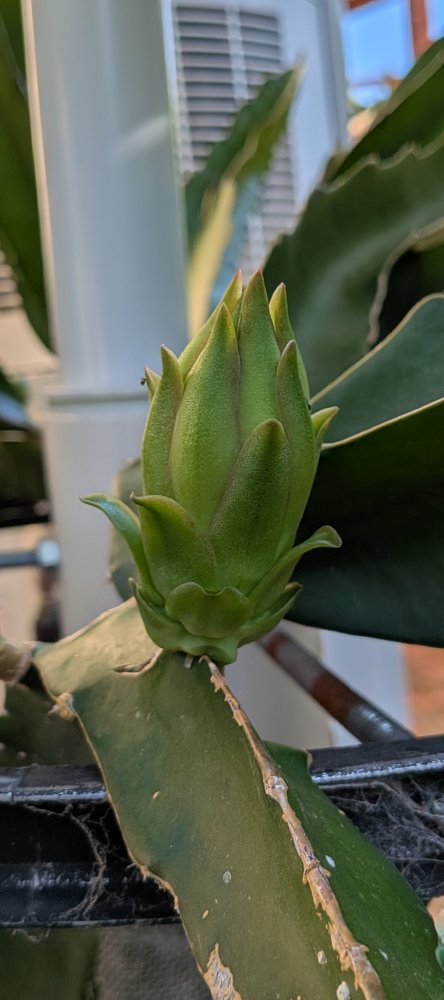
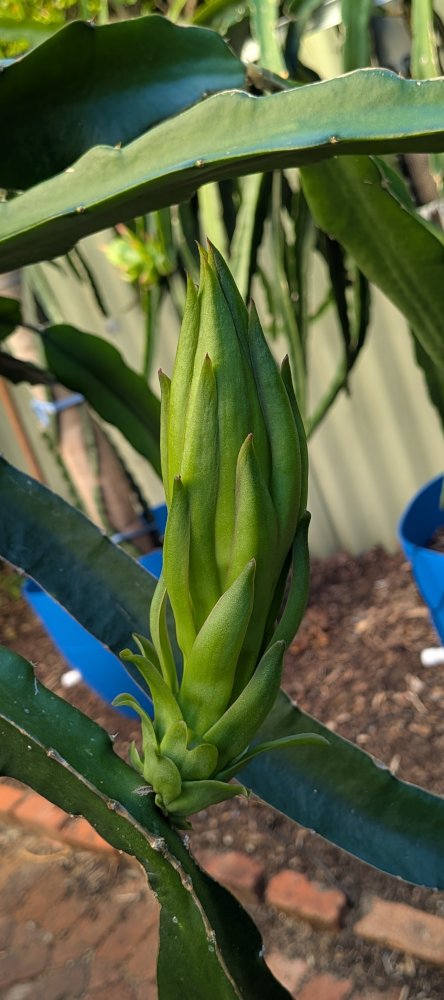
As I have already mentioned, the buds on Chameleon are quite a standout when compared to other varieties. At first, nothing seems out of the ordinary, just a small pale-yellow button saying hello to the world. But quite quickly the sepals bend back, enhancing their pale green colour towards the centre of each sepal, giving the bud an almost variegated appearance. As the bud matures, the sepals straighten out and the variegated appearance goes away, and from then on development is pretty standard.
Flowers
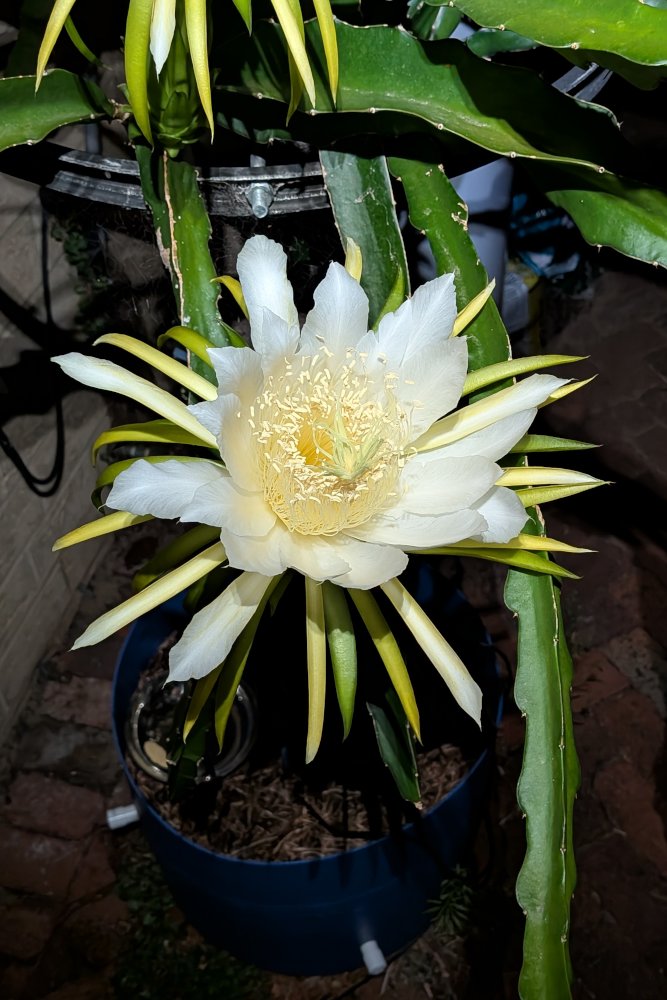
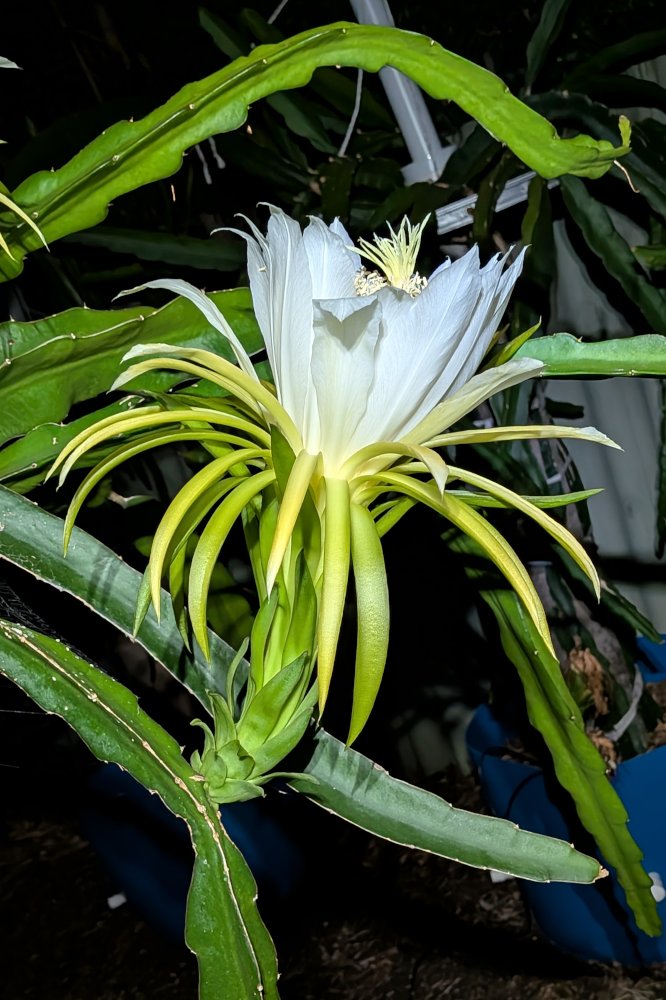
The flowers are sort of dull compared to most of the other aspects of this variety. Don’t get me wrong, all dragon fruit flowers are nice to look at, but after you’ve seen hundreds of these things, this one just didn’t really stand out. The stigma is close, but not inside of, the anthers, so your best bet is to hand pollinate. It would be interesting to see whether this variety can produce a large fruit under its own pollen, because sometimes even self-fertile varieties are much better cross-pollinated.
Fruit
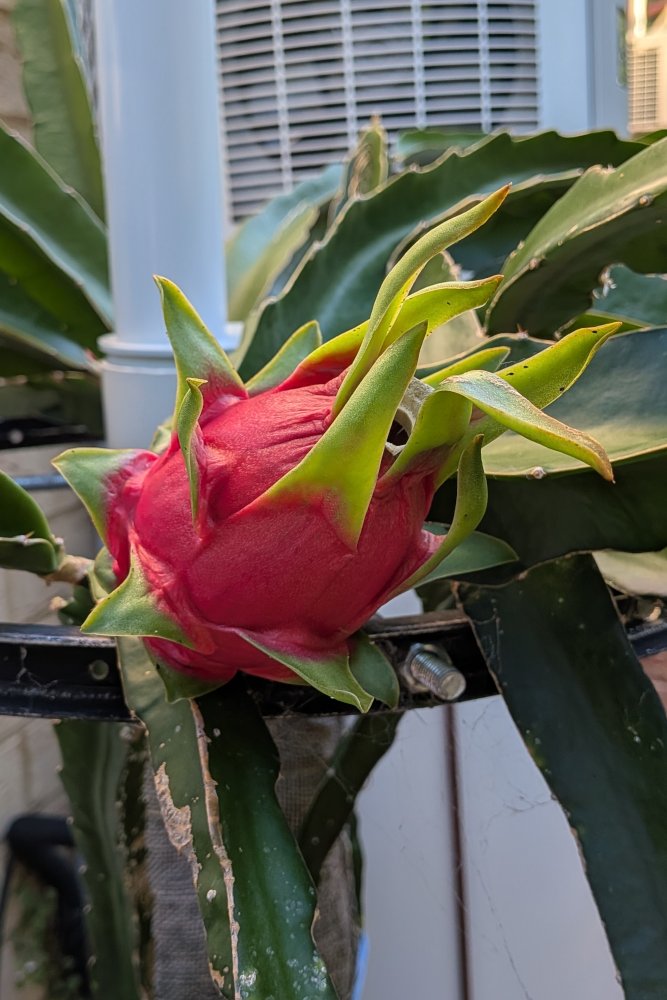
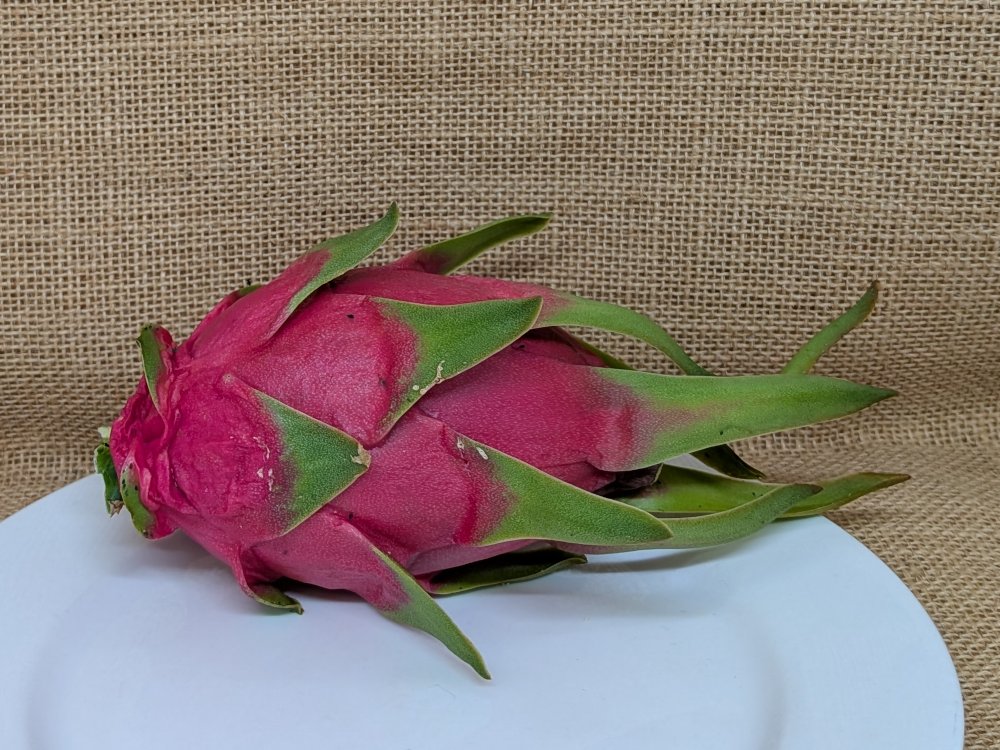
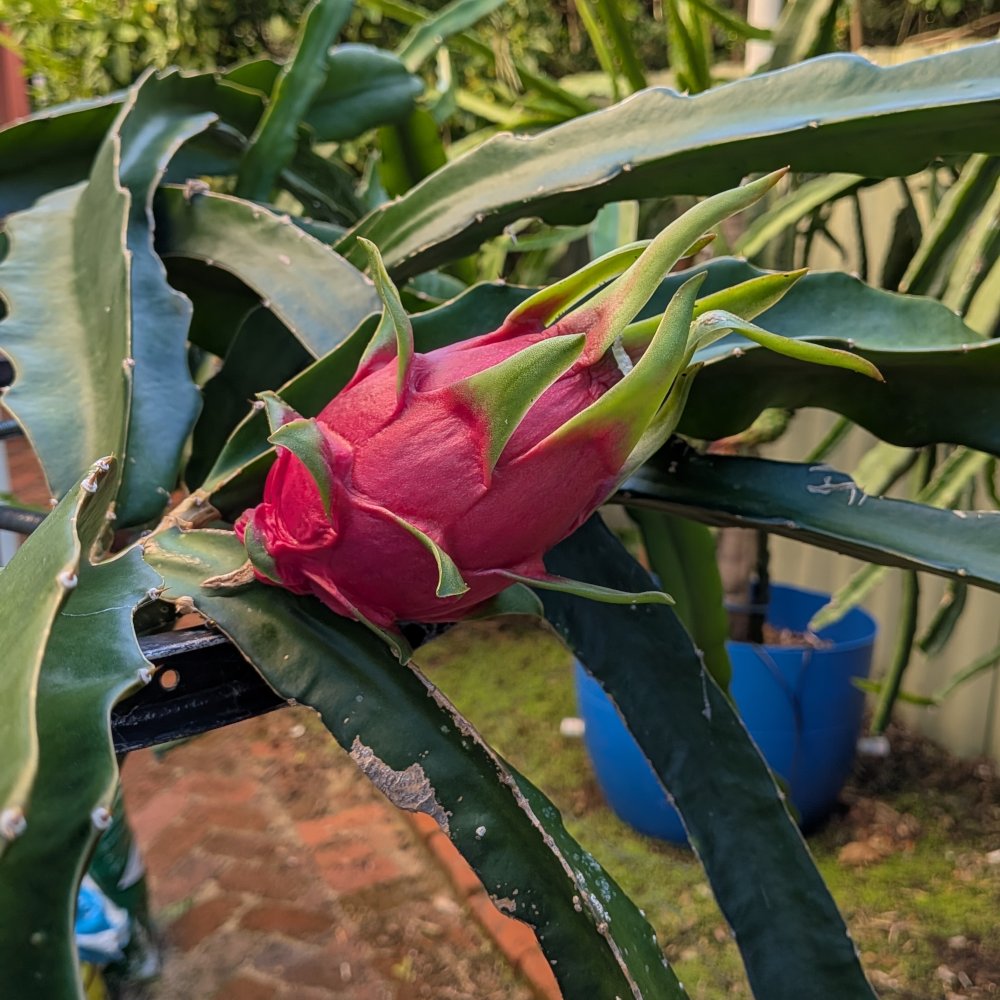
Now onto the fruit. From my two, shrivelled-up test cases, there is not much I can really conclude, other than that the bracts seem to be quite long. The real trick with this variety (if you want a good picture) is timing. From what I understand, the flesh starts out mostly white, with only a thin layer of purple framing it, and as time goes on this frame gets wider and wider until eventually most of the flesh is purple. I am unsure if the best flavour correlates with the best colour separation, though I am keen to test it.