Overview
H. guatemalensis × undatus, cv. Delight
Other names: 3-S
Pollination: self-sterile
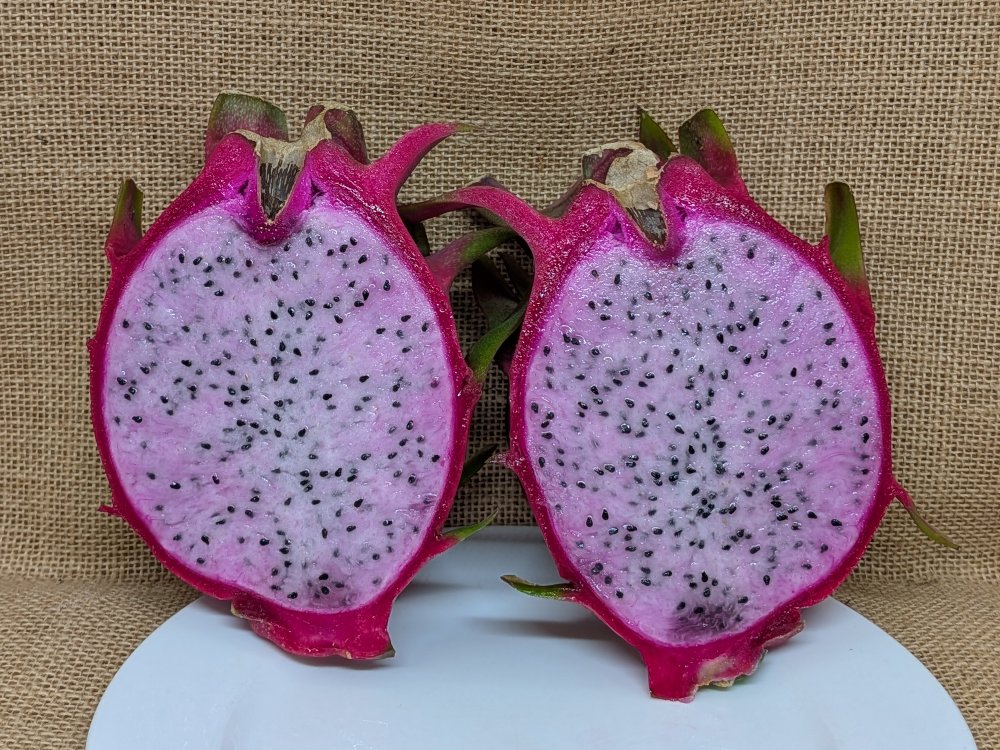
Many years ago, I bought “Delight” from a fellow hobby grower who had the photos to prove it, but somehow, I still ended up with the wrong thing. Turns out it might have been Purple Haze (which also took me two tries to obtain), another of Paul Thomson’s famous S-series. While they might look similar on the outside, the flesh colour is markedly different which was why it was a dead giveaway that I had the wrong thing. In terms of flavour, Thomson preferred Delight to all of his other seedlings, which is perhaps why he gave it such a suggestive name! I can’t say it has knocked my socks of yet, but I’ve only had two fruits, of which one snapped off early, so I still have high hopes for the coming seasons. Growth is slightly weaker than some of its sisters, though still strong.
Buds
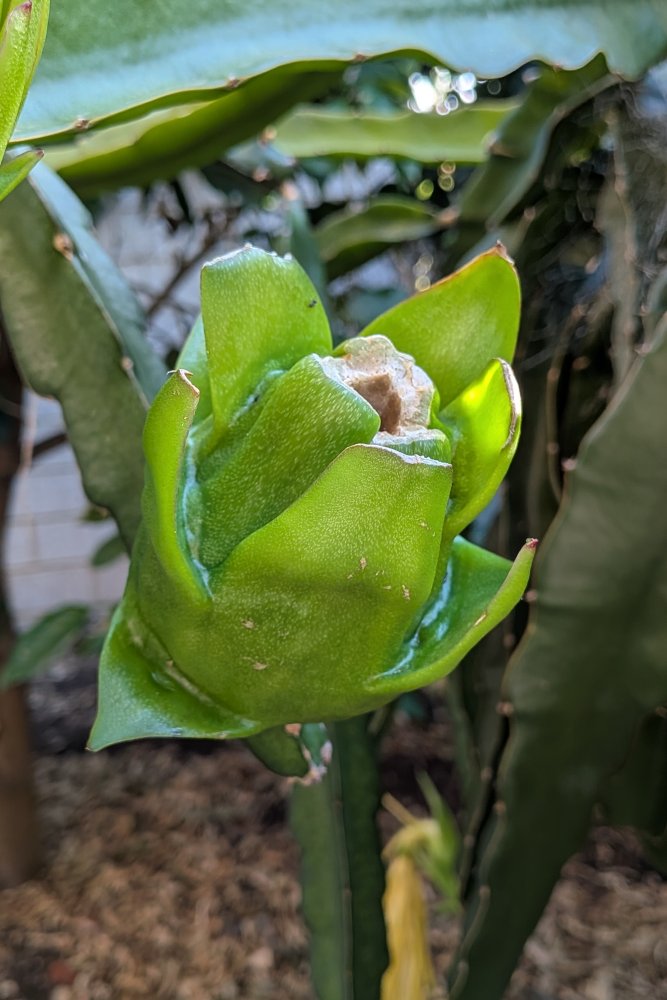
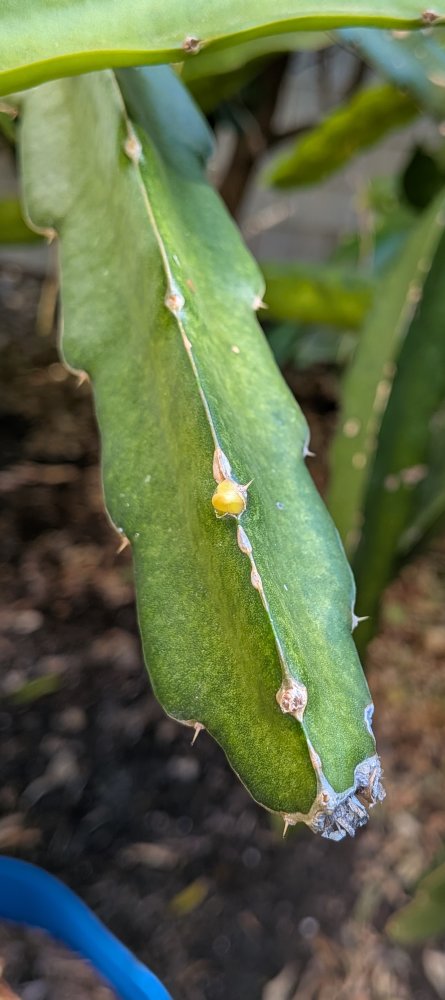
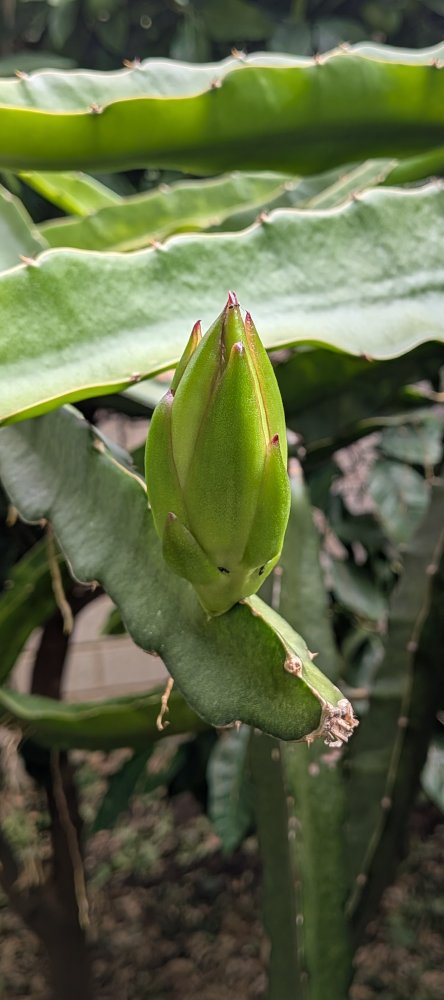
If you’re on the dragon fruit bud hunt, Delight gives the game away with little golden buttons which quickly become light green as they grow in size. The tips of the tepals are a deep red, which is surprising given its light pink flesh, and even more so when you consider that they are absent from the buds of Purple Haze, which has a more vibrant flesh colour. Another distinguishing trait is that the end of some of the tepals tend to yellow as the bud matures and eventually wither away when the fruit ripens.
Flowers
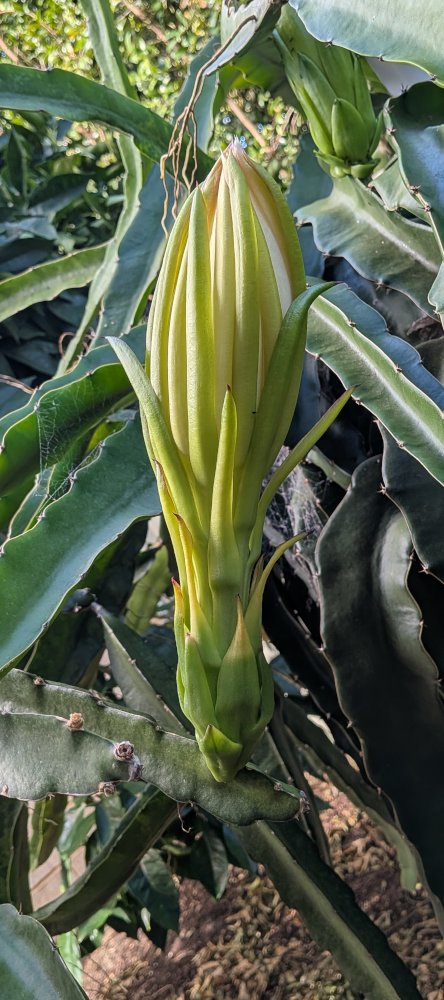
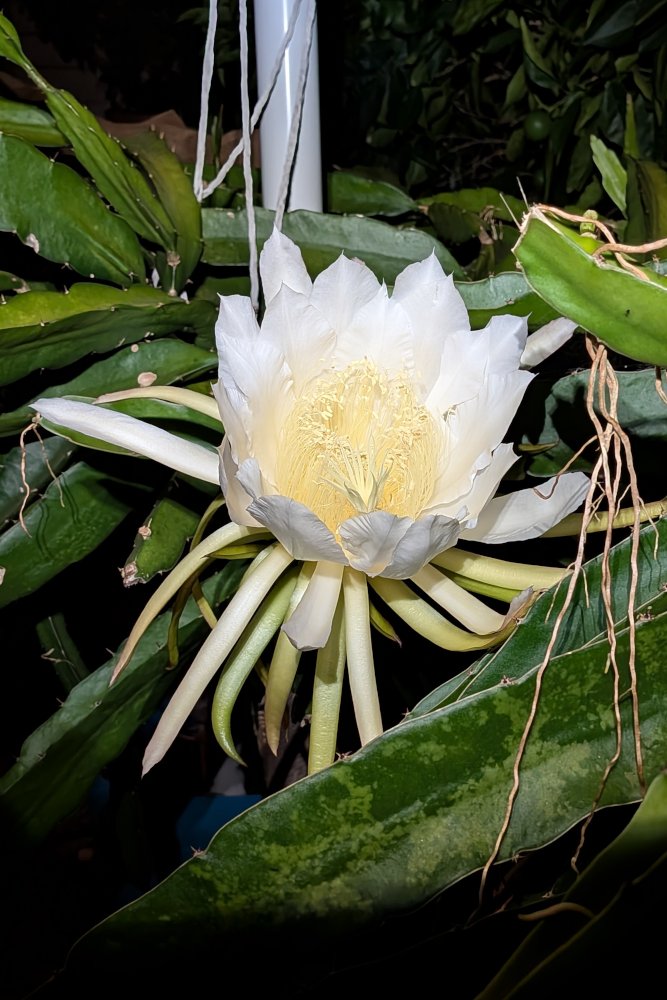
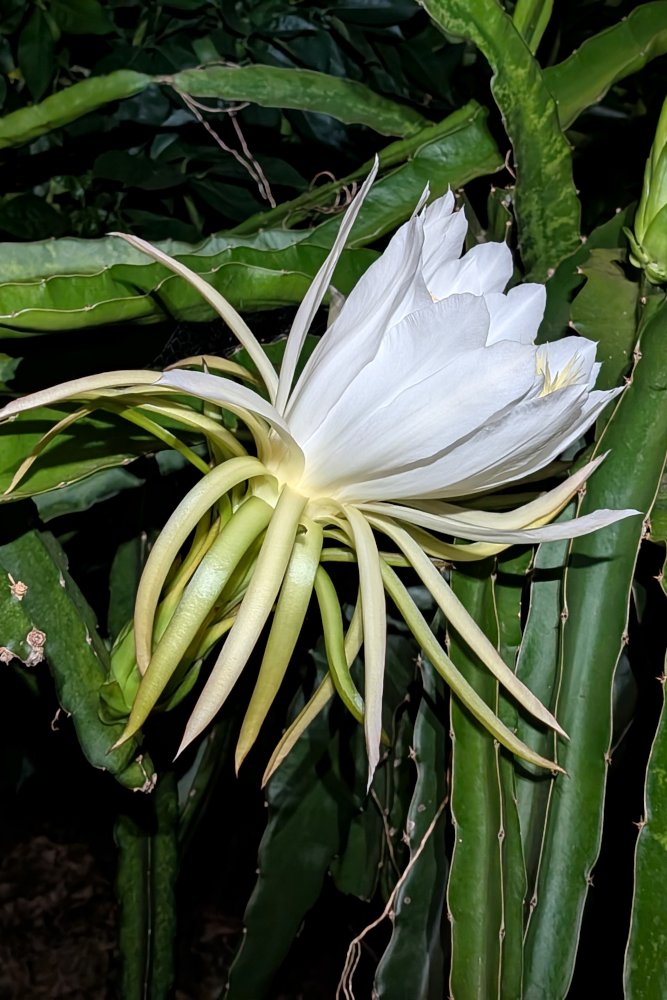
The flowers are very standard on this variety, with a stigma that protrudes away from the anthers, though not excessively. The status of its fertility is surprisingly not well-established for such a popular, long-standing variety. While the debate still continues, I would say the majority are now in favour of it being self-sterile, which agrees with what Paul Thomson wrote in his book, “Pitahaya.” I have yet to test it myself, though the person I bought it off was a proponent of the self-sterile side.
Fruit
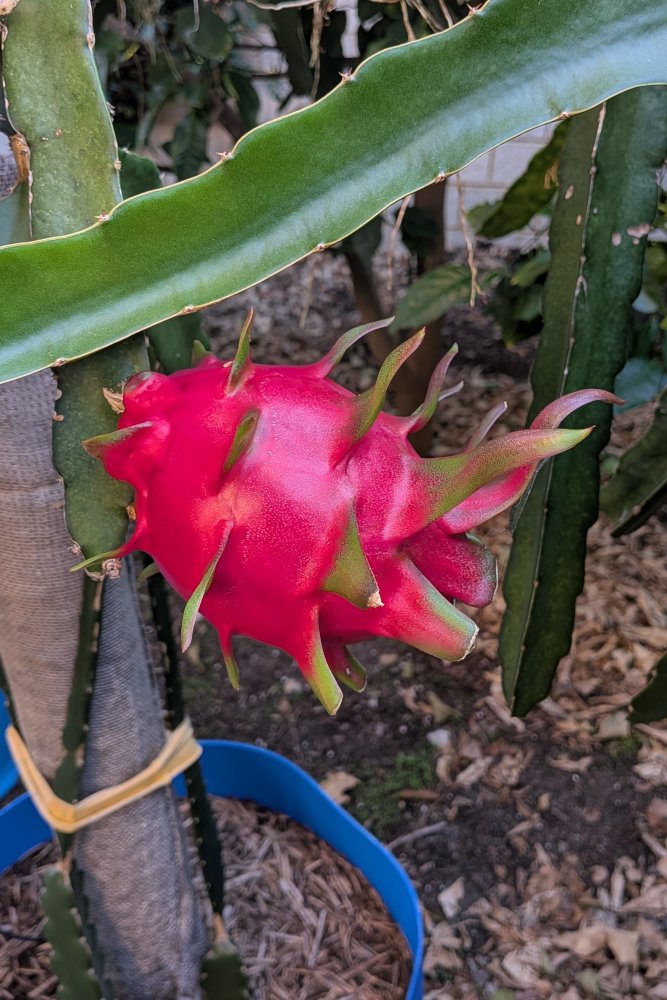
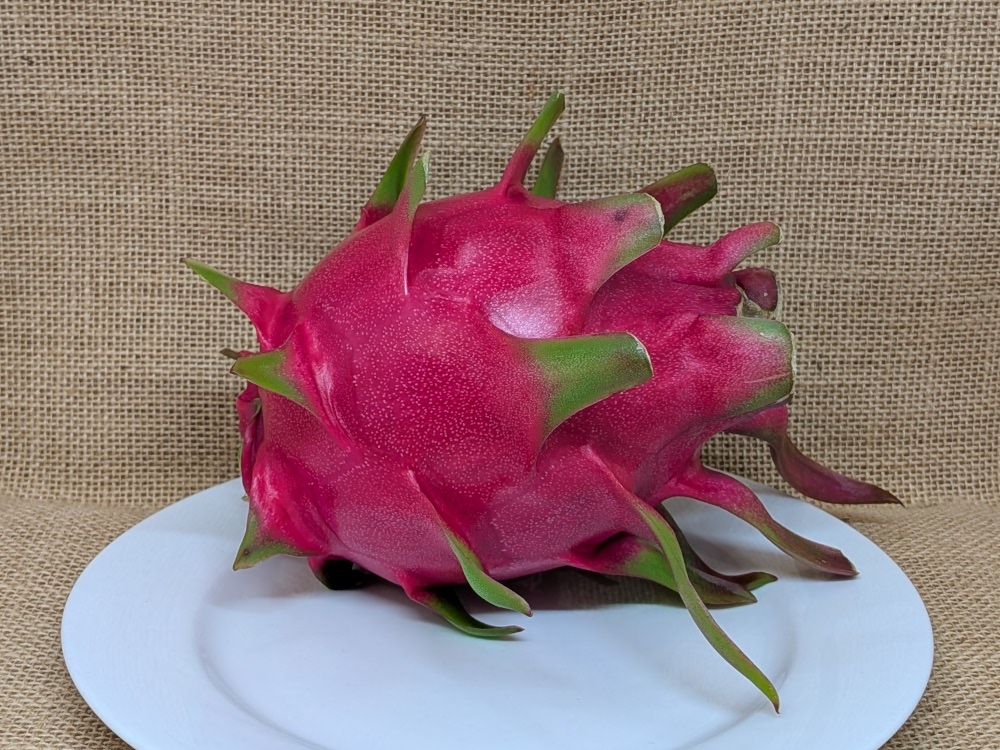
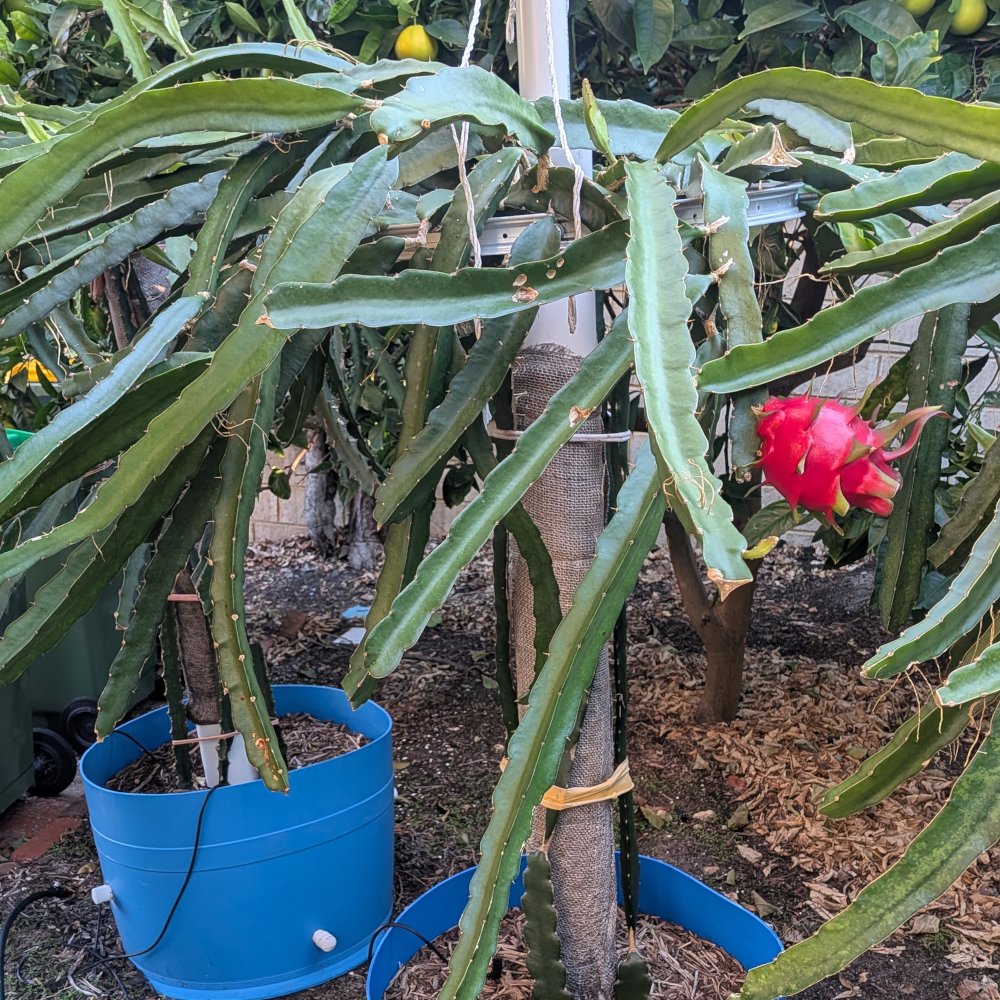
The outside of the fruit turn an incredibly vibrant, hot pink when ripe, making them quite the eye-catcher in the garden. Delight can reach a good size, perhaps even close to a kilogram (I’ve seen an absolute cracker in a photo), though are typically a medium-sized fruit. As far as flavour goes, I can definitely taste some of its aforementioned sister in there, though the texture is perhaps a little smoother, and the flavour not as strong. Hopefully it lives up to its name when the plant matures.